

Politics is not about policy.
Charity is not about helping.
Art is not about insight.
Education is not about learning.
So writes the economist Robin Hanson in one of his most famous blog posts, which formed the basis for his and Kevin Simler’s popular book and monument to soul-crushing cynicism: The Elephant in the Brain: Hidden Motives in Everyday Life.
Now you may be wondering: if politics, charity, art, and education aren’t about policy, helping, insight, and learning, then what are they about? According to Hanson and Simler, they’re about signaling. Politics is about signaling tribal affiliation, charity is about signaling virtue, art is about signaling upper-class shibboleths, and education is about signaling intelligence, work ethic, and rule-following ability to elite employers. The implications are soul-crushing: politics is mostly bullshit, dogooding is mostly a morality pageant, art is mostly an upper-class circle jerk, and the education system is a gargantuan waste of time and money.
Needless to say, not everyone is on board with these ideas. Some people throw Hanson a bone—they’ll admit that some things are about posturing and grandstanding—but they’ll say Hanson is too monomaniacal about it, brandishing his hammer of signaling and mistaking everything for a nail. I remember a discussion with Hanson where someone from the audience was curious about the extent of his monomania: “How much of human behavior do you think is signaling?” Hanson’s response: “90%.” There was a tumult in the audience and a “wow” from the questioner.
My goal in this post is to convince you that Hanson’s crazy-sounding response is not actually crazy. In fact, if you think signaling explains anything less than 60% of the human condition, then I’m afraid you are the crazy one. Hanson may be wrong about the details of his particular signaling hypotheses, but he’s right about the enormous importance of signaling in human life. So if you wish to acquire Hanson’s Soul-Crushing Hammer of Signaling (coming soon to World of Warcraft), it won’t be that hard for you. All you’ll have to do is accept three very plausible, empirically well-supported claims:
1) Humans are extremely judgy.
We judge each other on how much a lip is quivering, whether a bead of sweat is visible, or how much an eyebrow is arched. We judge each other on our tone of voice, dialect, decibel-level, phrases-per-minute, and specific word choices—e.g., whether someone said “go to the bathroom” or “take a shit.” We judge each other on body language, wardrobe, accessories, gesticulations, opinions, hobbies, muscle tone, thinness, face shape, masculinity, and femininity. Consumption patterns surrounding food, news, books, politics, music, movies, and home decor are all grist for the mill of our hyper-judgy minds. Social calculations are constantly feeding into assessments of intelligence, generosity, sensitivity, trustworthiness, manipulativeness, awkwardness, virtue, dominance, class, subculture, work ethic, athleticism, conformity, cleanliness, sense of humor, emotional stability, authenticity, maturity, outdoorsiness, and, ironically, judginess.
2) Humans care deeply about how others judge them.
All these micro-judgments feed into macro-judgments of a person’s relative desirability as a social partner, which in turn add up to a person’s social status, which we can think of as common knowledge of a person’s relative desirability as a social partner and its political implications. Social status is a currency that can buy you nearly anything you want, which explains why it is the single most important thing to humans aside from oxygen. As I put it in my recent academic paper:
There is abundant empirical evidence that status is a basic human need—one of our most powerful motives (Anderson et al., 2015; Storr, 2021; Sznycer et al., 2017; von Rueden, 2024). We endure costly trials and tribulations to win the esteem of our peers, from religious rites to yam-growing contests to death-defying risks (Storr, 2021). Across cultures, feelings of pride and shame are exquisitely sensitive to others’ approval, accurately tracking the judgments of local audiences (Sznycer et al., 2017, 2018). Social rank is correlated with reproductive success among a wide variety of mammalian and primate species, including humans, suggesting that status-seeking is a deep part of our evolutionary heritage (Cowlishaw & Dunbar, 1991; Ellis, 1995; Huchard & Lukas, 2022; von Rueden & Jaeggi, 2016).
History is littered with examples of tyrants and monarchs pushing their countries to war to defend their status or posture as an alpha male, and with young men dying on the battlefield to prove their valor and piety to their peers. In honor cultures, people kill themselves or their family members to avoid humiliation, and to prevent the social stain from tarnishing the rest of the family. Research by Andrew Vonasch and colleagues reveals that many people in the western world would rather cut off a limb, rot in a jail cell, or literally die than be seen as a nazi or child molester. We kill for status. We die for status. Sometimes, we do both at the same time.
3) Humans are extremely good at getting inside each other’s heads.
Psychologists call this ability “mind reading.” The reason they call it that is to convey how magical it really is. Our mind reading powers may be the clearest example of something that truly separates humanity from the animals. We can deftly figure out each other’s feelings, desires, intentions, hopes, doubts, beliefs, suspicions, plans, resentments, discomforts, irritations, pleasures, pains, attractions, and embarrassments. We can do this effortlessly and without even thinking about it. And the most impressive thing we can do is turducken these simulated mental states inside of other mental states, judging Bob for what he thinks about Mary’s feelings about his plans. We can anticipate how others will judge us if they realize that we were trying to impress them, and we can awkwardly avoid calling attention to something when everyone knows it—but doesn’t yet know that everyone knows it. Psychologists call this ability “recursive mind reading,” because mental states are embedded inside of other mental states like Russian dolls. Studies show that humans are capable of ascending to seven levels of recursive mind reading.
The tripartite foundations of signaling
As soon as you put these three claims together, the force of logic comes crashing down on you. Humans have: 1) a powerful motive to signal (i.e., their urge to gain status), 2) a powerful means to signal (i.e., their spectacular mind reading powers), and 3) a vast number of opportunities to signal, roughly equal to the number of ways they are judged by their hyper-judgy peers.
So what happens when Prometheus gives humans the power to read others’ minds at multiple levels? Well, a whole vista of other people’s micro-judgments and macro-judgments opens up before their eyes, including a dizzying array of judgments about thoughts about feelings about plans. These humans can now predict how an audience will judge them for anything they might say, do, or refrain from doing. And since audiences judge them in a variety of byzantine ways (claim 1), and since humans care deeply about how audiences judge them (claim 2), humans will inevitably contort their words, deeds, and appearances to shape their audience’s judgments in their favor, as surely as objects fall to the earth when dropped.
Humans have a filter in their heads, screening out verboten impulses in nearly every waking moment: the “what will people think” filter. Practically everything we do passes through this filter, even when we’re in the privacy of our own homes or in an anonymous situation. In a nosey species like ours, few things are truly anonymous, and besides, even truly anonymous behaviors leave behind footprints and consequences. These trails of evidence can be leveraged in the future if we are put on the stand to defend our character. “But I really do donate to charity—look, here are the receipts!”
When we contort our behavior to win others’ admiration, or to avoid others’ disdain, that is called “signaling.” There is no other word for it. Remember: a signal is just an attempt to convey information to others, typically about oneself or one’s mental states. The information doesn’t need to reach anybody. The information doesn’t need to have the intended effect. All that is required is the hope, however much in vain, that the information will be received by someone, somewhere, at some time.1
Let’s take a concrete example: outdoorsiness. If we judge each other on this trait, then we will naturally get inside each others’ heads and realize that we are going to be judged on this trait. If outdoorsiness is good, then we’ll feel an urge to mention our camping trip and talk about the beautiful hike we went on. If outdoorsiness is bad, then we’ll feel an urge to complain about how dirty and mosquito-infested the world is. These behaviors are signals. Even the choice to not mention your camping trip counts as a signal in the technical sense, because it is an attempt to convey information—“I’m not outdoorsy”—to your hyper-judgy peers. It’s analogous to the signal that a stick bug sends to its predators:

Now take that lesson from outdoorsiness and apply it to every other micro and macro-trait we judge each other on. Once you do that, you will see that there is a causal pathway from 1) judging others on a trait to 2) getting inside others’ heads and realizing that they will judge us on that trait to 3) trying to signal that trait to others to 4) getting inside others’ heads and realizing that they will judge us for trying to signal that trait to them to 5) trying to signal that we are not trying to signal that trait to them (even if we are). This mind-bendingly paradoxical process generates a lot of the volatile stuff we call “culture,” and it gives a major strategic advantage to socially skillful people who can pull off all the mental gymnastics. One implication is something like a law of signaling:
The number of ways people signal in a culture is roughly equivalent to the number of ways humans judge each other in that culture, multiplied by the number of ways these judgments are recursively embedded inside other mental states and anticipated by other recursive mind readers.
So yea, the idea that signaling pervades human behavior, underlying most of what we do, is plausible. The idea that we have a “what will people think” filter installed in our brains, through which nearly all our behaviors pass—and which, in the process, transforms nearly all our behaviors into signals—is plausible. Let’s call this plausible view the signaling view.
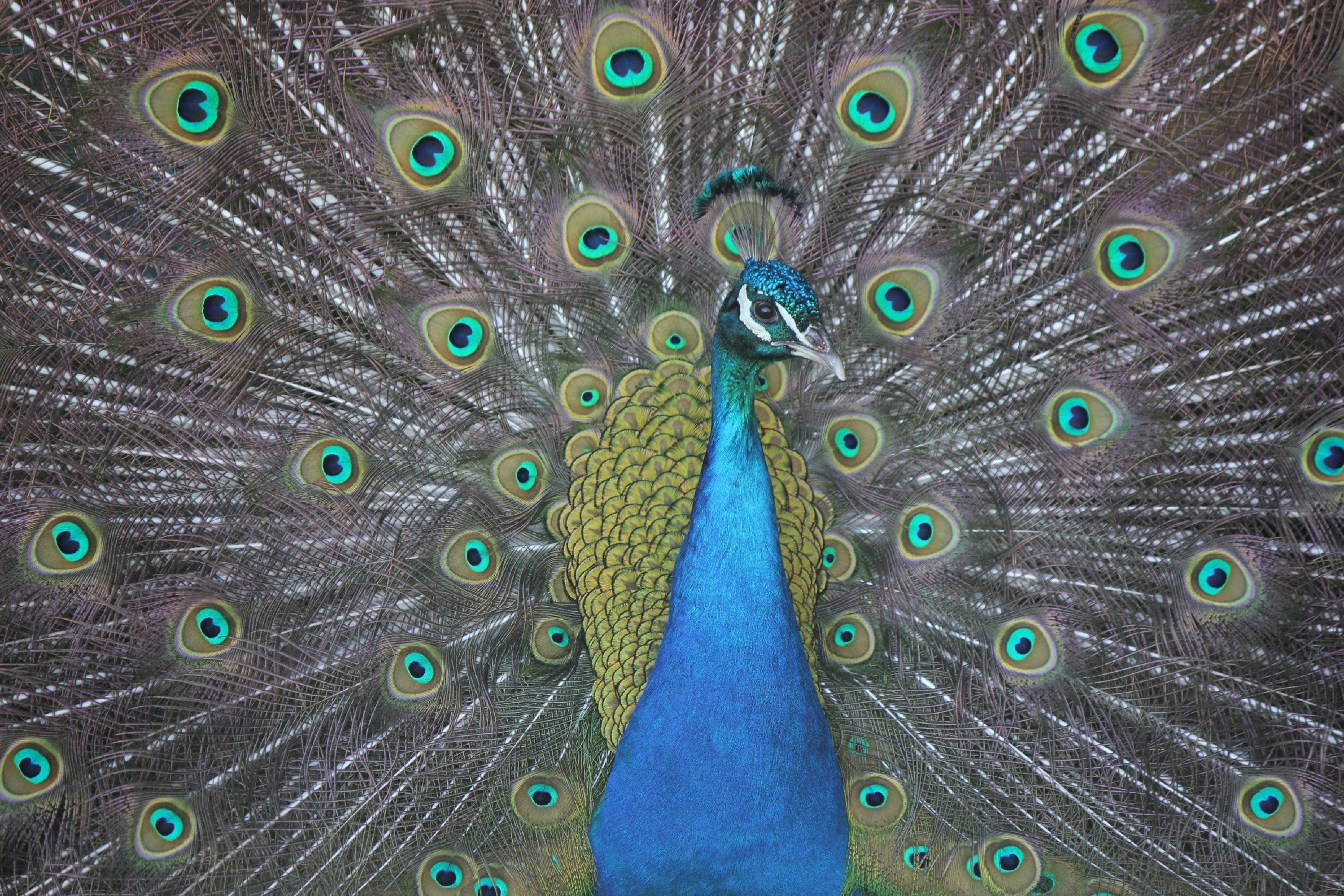
People don’t like the signaling view. It’s icky and cynical. Isn’t education about the quest for knowledge and wisdom? Isn’t philanthropy about helping the needy? Isn’t politics about advocating for policies that promote the national welfare? To reduce these activities to peacocking is to imply that we’re all a bunch of vainglorious assholes—that nothing is sacred.
Whenever I suggest a signaling explanation for some behavior, particularly a behavior we all engage in, I can see people squirm. And because I’m a human who’s good at mind reading, I know what the squirming means. The ironic result is that I usually don’t talk about icky signaling stuff in polite company. I save it for my cynical blog.
If you’re one of those people who’s icked out by the signaling view, I have good news for you: there is a way to accept that signaling pervades human behavior without being extremely cynical at the same time (though you’ll still have to be moderately cynical). The way to do it is by acknowledging an underappreciated truth: most signaling is defensive.
Why most signaling is defensive
What is a defensive signal? It’s a signal designed to avoid looking inferior to your peers—e.g., dumber, meaner, thirstier, less devoted to the tribe, etc. It’s designed to avoid our worst nightmare: a descent to the bottom of the social ladder. The content of a defensive signal might be: “I’m not an idiot,” “I don’t endorse any racist stereotypes,” “I’m not a closet conservative,” “I’m not a vainglorious asshole,” or “I’m not engaging in offensive signaling.”
Which brings me to offensive signals, the things designed to make you look superior to your peers—e.g., smarter, wiser, nobler, more enlightened, more devoted to the tribe, etc. They’re designed to help you fulfill your greatest fantasy: ascending to the top of the social ladder, even if it means climbing over other people. Their content might be: “I’m the coolest person in the room,” “I’m sooo virtuous,” “I’m much more progressive than you,” and “I know lots of obscure stuff you don’t know.”
People who send offensive signals are, well, offensive. They’re trying to make us look bad—to step on us, insult us, or upstage us. We don’t like offensive signalers for the same reason we don’t like status-seekers; we see them as vain and self-absorbed. And we’re not wrong: people who more eagerly send offensive signals probably are more vain and self-absorbed. Our judgments tend to be pretty accurate.
But defensive signalers are, well, inoffensive. If you’re sending a defensive signal, you’re not trying to outdo me; you’re just trying to protect yourself. If you’re trying to hide your shortcomings, you’re not trying to diss me; you’re just trying to avoid shame, exclusion, and embarrassment. Defensive signalers are more sympathetic. We often feel sorry for them, and we can more easily relate to them.
When I write cynical blog posts about how signaling motives explain advice or deepities or philosturbation about the meaning of life, people often assume I’m only referring to offensive signals, as if defensive signals didn’t exist as a category. Then they draw the wrong lesson, namely that the world is more vain and narcissistic than it appears—that there are more egomaniacs out there than they thought. Please don’t draw that lesson. There are roughly as many egomaniacs as you thought there were.
The best defense is good offense
Unfortunately, offensive and defensive signals are hard to tell apart. If I want to avoid getting shamed, blamed, or ganged up on, it’s not enough for me to avoid looking dumb or mean or conservative: I might have to positively show that I’m smart or virtuous or progressive. If we’re in the middle of a witch hunt, for example, it is not enough for me to send the defensive signal: “I’m not a witch.” I might have to throw in a bit of offense too: “I hate witches, and I think my neighbor is one of them.”
Another nuance is that people will often try to pass off their offensive signals as defensive signals, precisely because defensive signals are less threatening and more sympathetic. “I wasn’t trying to insult you—I was just feeling insecure about myself!” This excuse allows offenders to continue their offending under a veil of self-defense, not unlike countries that go to war on false pretenses.
Even trickier, defensive signals often hide in the darkness like terrified mice. People have good reason to conceal their defensiveness, not merely because saying “I’m not racist” makes you wonder whether I’m racist, but because defensive signaling is a valid cue of low status. People who are low-status, or who are afraid of becoming low-status, rarely want to reveal that fact to other people.
Giving defense its due
But even though the difference between offense and defense is hard to discern, it seems like an important distinction. At the very least, it seems to match my personal experience. From the inside, it feels like my dogooding and charitable donations are driven more by a fear of being a bad person than from an ambition to be holier than thou. In the theatre of my imagination, I’m more compelled to imagine people shouting “Boo, David!” than a crowd of people cheering my name. I don’t care that much about people thinking I’m Mahatma Gandhi. I’m mainly just trying to avoid looking bad.
I suspect my experience is not that unusual. I’m guessing it feels that way to you too. You’re probably more worried about getting frowned upon than you are hellbent on looking superior. This is part of a general well-replicated pattern with human emotions where bad stuff is more powerful than good stuff. Which makes sense from a Darwinian perspective: just put biological fitness on the y axis and any goodie (food, sex, status) on the x axis, and you will see a curve with diminishing returns and a sharp drop-off at zero. Avoiding that sharp drop-off is the purpose of our negative emotions, which explains why evolution made them more urgent than our positive emotions.
Defensive signaling is also a huge part of our moral discourse. Most moral arguments do not appeal to our desire to be holier than thou, but to our fear of being a bad person. Peter Singer’s famous shallow pond thought experiment—where neglecting to donate to charity is equivalent to callously walking by a drowning child—is the perfect example: it implies that you are just as bad as the psychopath who refuses to ruin his fancy suit to save a child’s life. The shallow pond scenario is effective not because it shows us that we can be better people, but because it shows us that we’re actually bad people. It speaks directly to our worst fear.
A lot of people who favor signaling explanations of human behavior, including Hanson and others, tend to overemphasize the offensive parts and underemphasize the defensive parts, so as to make their explanations more surprising and provocative (we’re all just competing to be interesting after all). I haven’t gone through my blog posts and checked, but I suspect I’m probably guilty of doing that. Okay, I’m almost certainly guilty of doing that. I apologize: I’ll try to do better in the future.
But in my defense, I only had this insight about defensive signaling very recently, so I had no idea I was doing that. It was an honest mistake. How could I be a bad person if I didn’t know I was doing anything wrong? Oh please please please, whatever you do, don’t think I’m a bad person!
The “hope” could even be metaphorical—the function of an unconscious process. Many of our signals emerge by force of habit, like the urge to say “god bless you” at the sound of a sneeze or the impulse to shake a person’s hand when they extend it. The “what will people think” system churns in the darkness, screening out all the verboten options before they make it to conscious awareness, creating the illusion that our decisions are free of social influence. And when our signaling motives push us up the staircase of recursive mind reading, we often forget what got us up there in the first place, as when we try to make others think we don’t care what they think—and lose sight of the fact that we wanted them to think that.
What’s more, many of our signals aren’t sent by us at all but by the evolutionary process, which shaped our facial expressions, body language, and vocal intonations to signal our feelings to others. Evolution also shaped our basic motivations, which can steer us toward investing in costly signals over many years—like earning a college degree—without us being aware of the steering. Then there are the more fleeting motivations, like the urge to namedrop a cool person we know, which can tug on our vocal cords without our permission. Social dynamics can further blind us to our signaling motives, as when we try to convince others that we weren’t flexing, humblebragging, or thirst trapping, and convince ourselves in the process. All this is to say: the signals we are consciously aware of sending are the tip of an iceberg—or, more accurately, a polar ice cap.
Another masterful essay on reputation management, following on the heels of Charisma is Bullshit. By the one-item intelligence test (the degree that your views are the same as mine), David Pinsof is a genius.
Although I cannot fault him for not citing sources that he is not familiar with or influenced by (or was simply unable to cite due to lack of time or space because you cannot cite every relevant source), I wish he would acknowledge the work of Erving Goffman's ideas on impression management in The Presentation of Self in Everyday Life. Also (for selfish reasons) writings by my graduate school mentor, Robert Hogan (who was influenced by Goffman), and myself about personality as a form of reputation management by signaling. Hogan has argued that it is all about "getting along" (having people like you) and "getting ahead" (establishing status), and that signaling is the method by which people strive to achieve these things.
Hogan and I believe that most signaling is perfectly unconscious. Which makes good sense because self-conscious self-presentation tends to be awkward and unconvincing. I was wondering what David thought about conscious versus unconscious signaling, and glad to see that he commented on that in a footnote.
Whenever we say something like "most signaling is defensive" or "most signaling is unconscious," this raises the question of meaningful, stable individual differences (that is, personality) that coexist with the general trend. I wonder if David thinks that, in contrast to the generalization that most signaling is defensive, there are people who are consistently more offensive in their signaling than the typical individual, and how we might characterize them. Narcissistic? Histrionic?
One more thought that came to mind while reading this essay concerns the unacknowledged details about the function of informational signaling. This is not a shortcoming of the present essay, which could not possibly answer that question in a single Substack post. It seems to me that there has been an unbalanced treatment of the functions of communication by scientists who study this topic. Speech communication experts have written so much about the purpose of communication being the transfer of information from one person to another, and so little about how communications are literally attempts to control the behavior of other people. We do speak to give others information, but we don't provide information for the sole purpose of providing information. Rather, there is almost always an assumption that this information will make the other person feel a certain way, which will motivate them to behave in ways that we would like them to.
The field of linguistic pragmatics does deal with this function of communication, but pragmatics has been overshadowed by research on syntax and semantics. To its credit, the current essay suggests that the general function of signaling is to achieve status (or to avoid losing status). But the unanswered question is, what specific behaviors in the other person are we trying to encourage that will help our own status? The answer to that question is surely that there are dozens of specific behaviors that we are trying to encourage, depending on context, and that documenting them all could take a team of researchers a lifetime to achieve. I'm just saying that this could be a worthwhile endeavor.
I think the defensive/offensive split gets sharper if you add the one variable you mostly hold fixed, which is the cost of producing the signal itself.
The whole equilibrium runs on signals being hard enough to fake that they still discriminate. So watch what happens when some technology makes a given signal cheap to produce. It doesn't democratize the underlying quality. What you often see if that it just forces the judges to relocate to a costlier signal that still separates people, and the old one quietly dies. The cruel part is what that does to your defensive category: once a signal is cheap, having it can't lift you, because everyone has it, but lacking it still sinks you, because now there's no excuse.
Cheapening a signal converts it from a possible source of status into a pure liability, unremarkable when present and damning when absent. Is the set of signals a culture runs on mostly churning for this reason (old ones collapsing as they get cheap to fake while judges flee to costlier ones) or is the turnover driven by something else?